Sunday, June 9, 2013

Just Why Are All These Intrusive Programs Legal?

By Robert H.

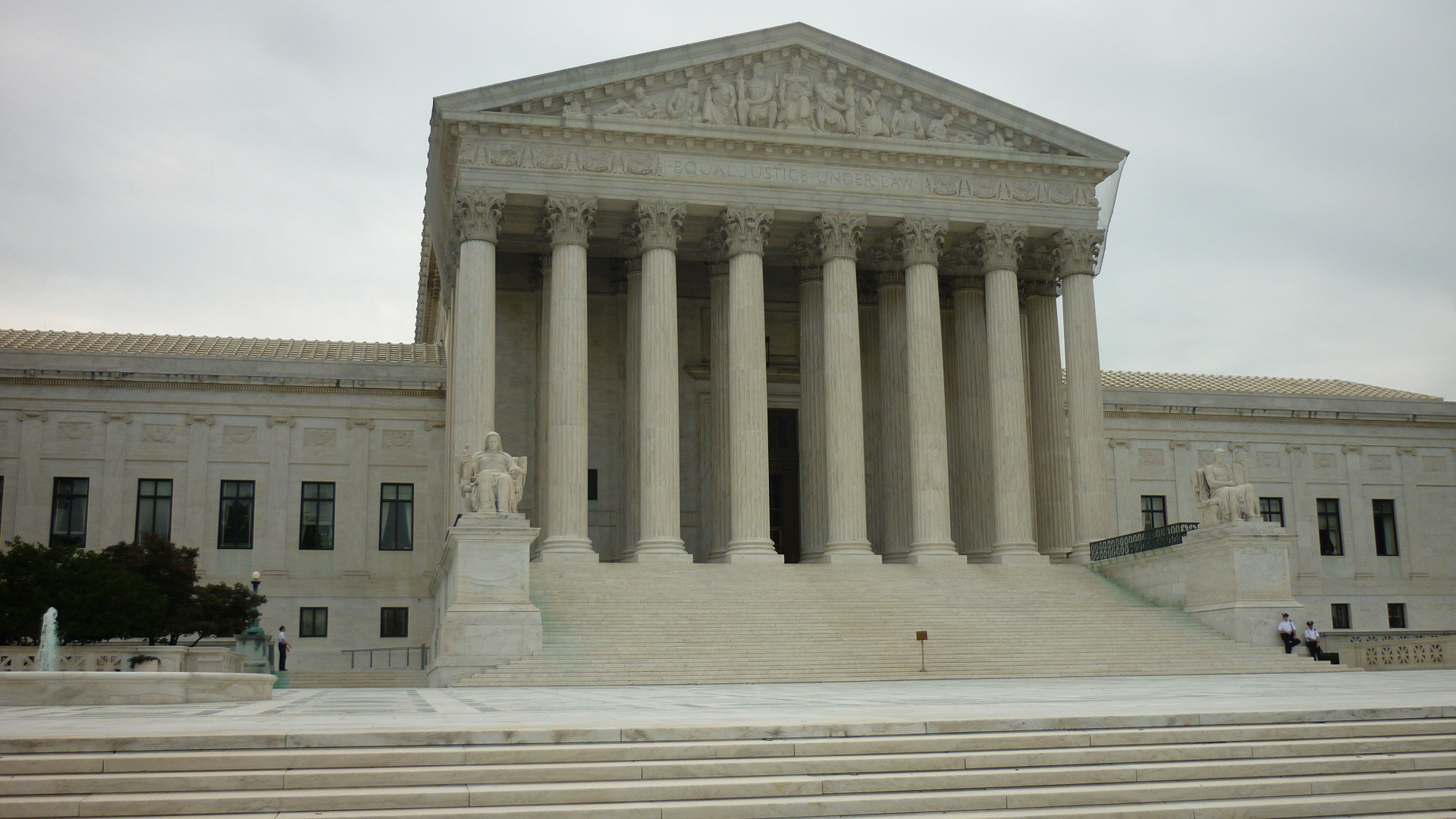
This is the only picture saved to the blog that could possibly fit
a post about constitutional issues, and I was too lazy to look on
wikimedia commons for a better one.
I've been blogging about some national security programs letting the government access  data related to our phone calls, plus some content held by foreigners outside the US (possibly, people are still wrangling over what exactly PRISM is).  Here's why they are probably legal:

1.  The Supreme Court has said you don't have a reasonable expectation of privacy in meta-data collected by third parties, like when the phone company keeps track of whom you are calling.  They've extended this to all sorts of information you've handed over to third parties.  The idea is that when you fork info over to other people, you run the risk of them ratting you out and so shouldn't be surprised if the government gets its hands on the info.

As a result, the government can constitutionally gather this information either with a subpoena to or with the consent of the third party.  The government does not need probable cause if it goes with a subpoena, since the that is thought to be less intrusive than a search (you gather the relevant documents yourself, at your leisure, selecting what you think is required, and then bring it to court).  There are some limits to how broad a subpoena can be, but the government only need bother with a subpoena in the first place if the third parties holding your data put up a fight.  If they are working with the government and handing over all the data voluntarily, there is pretty much no limit to what the government can ask for.

So, under the constitution all your meta data are belong to the government.

2.  That said, there are still often statutory protections that keep the government from gathering this stuff.  Sadly, in this case the patriot act has removed those.   The result is that the feds don't need probable cause to access third party routine business records when national security is on the line (or at least, when they say it is).

As a wrinkle on that, it does look like either the courts or the administration has imposed a reasonable suspicion standard on anyone who actually wants to access this data.  Which is nice, I guess.  A "reasonable suspicion" standard is a lower burden than probable cause -- think of it as the difference between thinking something is probably true vs having reason to think it might be true.

3.  In the case of PRISM, Courts have held that the executive has inherent power to search the contents of communications (IE, wiretap) if his purpose is gathering foreign intelligence.  Even better (from their perspective), the executive can pretty much spy like a fool on foreigners outside the US.

So that is that.


Corporations are Obviously People

By Robert H.


One good thing that should come out of the news that the government is massively invading our privacy: it will put to rest all the misguided attacks on corporate personhood we've heard lately.

Here's the story: the Supreme Court struck down a campaign finance law, partially relying on the corporate personhood doctrine (I mean very partially)-- the idea that for some purposes corporations are persons and some rights apply to them, in this case the right to free speech.  Rather than going after the specific extension of corporate personhood to speech issues (which I think had been made before this ruling), or some of the flaws in the decision completely unrelated to corporate person-hood, some critics (Examples here or here or here) decided that "the evil supreme court thinks corporations are people" was a good sound bite, and so people started saying they were opposed to the doctrine of corporate personhood.  This has led, as that last link reveals, to a movement, backed by actual congressmen, to amend the constitution and strip all rights from corporations.  Which is sort of terrifying.

See, pretty much no one is actually opposed to corporate personhood, as we learned this week.  I haven't read a single blogger or commentator say, "Of course the government can create huge secretive programs to take private information from google and apple and etc.  The government is searching the records of corporations, and corporations have no rights because they aren't persons."  Instead, people are reflexively assuming that fourth and fourteenth amendment rights against unreasonable searches and seizures are the proper starting points here, even if they go on to argue that gaps in fourth amendment doctrine makes what the government is doing narrowly legal.  This information is private.  It's personal and it's sitting behind closed doors and the people holding on to it are making every effort to keep it from getting out -- and thank God for that.  And the government should get free access to it because a corporation rather than a sole proprietorship is holding on to the stuff? Am I going to march in here and tell you that the government gets to burst down any door it wants, rifle through any file it wants, upend any trash can it wants, copy any hardrive it wants, so long as the ink on the door says "Inc."?

Of course I am not.  The idea that corporations have rights and should be, for some purposes, treated like persons is not controversial.  No one wants to live in a world where the government can seize corporate property without due process, search corporate records at will, convict corporations without trial, etc.  For some purposes, we obviously want to treat corporations as persons (and that specific word, "persons," is important and necessary since the 14th amendment, the one that keeps states from violating your rights, protects "persons."  It would be nice but impossible to use a less emotive term).  At the end of the day, if the government steals corporate property it is, ultimately, stealing from people.  Of course, for other purposes, we obviously don't want to give corporations rights (right to vote, say).  And there's probably a middle ground we need to argue about (Corporations have a right to free speech but no fifth amendment right to not be compelled to testify against themselves, for example, both of which I think can be questioned).  If you agree with those three points  -- and I hope you do -- you more-or-less agree with the doctrine of corporate person-hood.  Hooray you.  Now go argue against Citizens United on the grounds that the law in question was a narrow, content neutral restriction appropriately limited to serve the government's interest in protecting candidates from implicit bribery, or something.

Still Banging my Drum

By Robert H.

Kevin Drum asks and answers a question.

[I]t's possible, even likely, that these professionals aren't abusing the data they've collected. Not yet, anyway. But does Obama really think that a government that collects this kind of stuff won't abuse it eventually? That's vanishingly unlikely.


Drum wants to know what Obama really
thinks and when he really thought it.

 That strikes me as an odd assertion for three reasons:

1. You'd think, with that degree of certainty, that Drum is thinking about some particular examples.  But I know a lot of history and I can't think of any.  There have been lots and lots and lots of governments that collected information on their people *and* abused that information, but normally they go hand and hand.  It's not like the communists in Russia created the Cheka, it gathered lots of information about people, and over time its resolve weakened and it started using the info to aid in torturing and imprisoning innocent Russians.  It tortured and imprisoned them right out of the gate.  Just so, it's not like the FBI got the power to wire tap and then used it responsibly for decades before ultimately backsliding.  It was bugging political dissidents from early in its history.

On the flip side, you can think of intelligence gathering operations that have been going on for a while without any abuse scandals.  Just off the top of my head, ECHELON has been targeting foreigners since before PRISM was a glint in some spook's eye, and as far as I know it has never been credibly accused of abusing its power to go after Americans.

2. I think it's just obviously wrong.  As I tried to make clear in my last post, simply keeping the government from gathering information is our first and weakest line of defense when it comes to keeping the government from abusing that information, so the government getting the information does not mean that the war is lost and abuses are right around the corner.   In America, even when the government can collect info in secret, most of the things it does to us -- tax us, seize our property, imprison us -- happen openly and can be challenged in court, where secret information gathered without due process can be disallowed (the exclusionary rule) or, at least, exposed.  The scary stuff is the supreme court making loop holes in the exclusionary rule or congress letting people be convicted with secret evidence or the states secret privilege letting abusive government actors avoid court.  The least scary stuff is the mere fact that the government is gathering information (duh, of course they are.  They have been for decades).  I'll say it again: the government gathering secrets is not as scary as the government using secrets, which is not as scary as the government using secrets in secret.

3.  The government is probably not doing anything illegal with these programs.   So I think it is a bit brazen to claim that illegal or unconstitutional abuses are a natural follow up.

***

So yeah, my point is A. If you don't think the government is abusing these programs, it's not inevitable that it will, B. The news of this week shouldn't adjust anyone's priorities.  The government gathering information is not nearly as scary as lots of the assaults on due process we already knew were happening. The key to surviving the information age with our liberties intact is not going to be locking down the flow of information to the government (or to anywhere else, for that matter.  Remember, the government isn't even invading our privacy with these programs, it's invading the privacy of companies we merrily gave access to our private information without a second thought.  Privacy is dying at our hands, not government's, and it's futile to imagine a world where we freely distribute and share our secrets but the government politely looks the otherway).  Rather, preserving our liberties will depend on 1. Maintaining (and expanding) a robust exclusionary rule for private information gathered without probable cause, while also expanding the definition of privacy to be more along the lines of "the stuff we work really hard to keep secret" as opposed to "the stuff, if there is any, we can actually keep secret," and 2. maintaining (and expanding) our ability to challenge government takings and restraints on speech in open court.

Big Brother Imprisoning You is Worse than Big Brother Watching You

By Robert H.

So this week we learned the government is gathering a lot of info about you without the usual procedures you jump through to get a search warrant (see links below), and people are freaking out.  But this ignores an important fact: search warrants themselves are really easy to get.  Search warrants aren't important because they make it hard for the police to search your house; they are important because they make it hard for the police to send you to jail.

Let's look at two attempts by the government to get information about you:

1. A cop goes to a judge and says a reliable informant he trusts promised you were a drug dealer.  He asks for a warrant to search your home.  The judge, inevitably, grants it.

2. A cop avers to the US foreign intelligence surveillance court that he needs meta data Verizon has about your calls, or searches through PRISM data in a way designed to avoid returning data about American citizens but which, in this instance, does return information about you.

To me, the procedure in one does not look much more rigorous than two, at least in terms of judicial oversight.  A cop trying to get an abusive search warrant just has to make up the existence of a reliable informant and, bam, a warrant is issued based on the testimony of "reliable informant" Lies McFartWhistle.

Lies McFartWhistle seen here (Lady McFartWhistle not pictured).


But now compare these two situations:

1. A cop made up the existence of a "reliable informant" to get a search warrant to your house, where he found drugs.  This comes out at trial after the warrant is examined and the cop questioned by the defense, the Court rules both that there was no probable cause for the search and that the officer did not act in good faith, and all the evidence springing from the search is ruled inadmissible.  Cops can't tell the jury they found drugs in your place; you go free.

2. A cop lies to get an FISC warrant and gathers data demonstrating you are a terrorist.  This data is then presented against you at trial. Because FISC warrants are secret, you cannot see the warrant or explore the reasons it was granted.  You go to jail.

Get my point?  It's very terrible when the government learns your private information and all, but it is really REALLY terrible when the government uses that private information to convict you of a crime.  Because of that, our number one safeguard against government intrusion into our privacy isn't magistrates issuing warrants -- they do so based on perfunctory and routine affidavits -- it is judges excluding evidence that wasn't gathered with probable cause.

In other words, the most important thing when it comes to the government invading your privacy isn't stopping the invasion itself, it is keeping the government from using the information they got to hurt you.  And that is why the use of secret evidence and secret warrants in criminal trials are and always have been the biggest threat to our way of life and to our privacy that has emerged in the war on terror.  And that's even if you include "terrorism" as something that has emerged in the war on terror.

So the new abuses that are being reported are bad, but you shouldn't take your eye off the ball: the real victims aren't we whose cell phone meta data is insecure, it is the terrorist being convicted or the immigrant being deported based on secret evidence approved by secret means.  It's not the government gathering secrets we should fear; it's the government using them.

Monday, May 20, 2013

Facts About Market Liquidity

By
Charlie Clarke

"On the London Stock Exchange, 50 percent of listed stocks account for only 1.5 percent of trading volume, and over 1000 listed stocks average less than one trade a day.  On the New York Stock Exchange, it is common for individual stocks not to trade for days or even weeks at a time, while one stock in London never traded in an eleven year period."

Easley, Kiefer, O'Hara, and Paperman (1996)

Sunday, May 5, 2013

Asset Pricing Theory Explained

by Charlie Clarke

Here is a funny video that makes fun of what I do all day, Empirical Asset Pricing, or maybe it makes fun of theoretical asset pricing and I'm in on the joke.  I haven't decided.  It doesn't point to the number of open questions in Asset Pricing that make it an exciting field to work in.


Wednesday, May 1, 2013

Paul Kroohgman

by Charlie Clarke

Paul Krugman is pronounced like Crewg - man or Kroog-man with the "oo" of moo, not like rhyming with hug, Kruhgg-man.

Get the word out. The mispronunciation seems as prevalent among his friends as his foes.